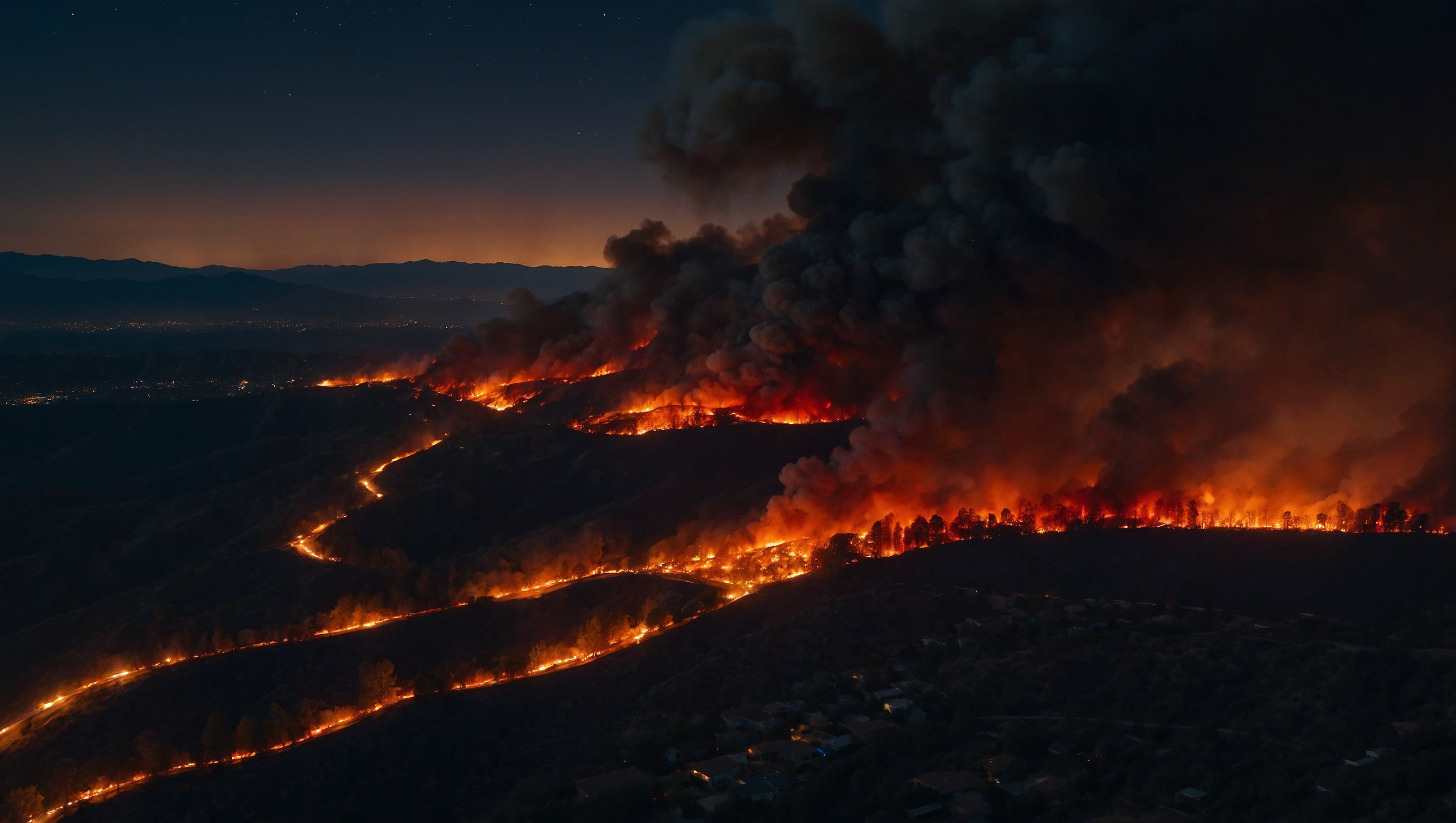
California wildfire at night — aerial view
Proposal to the State of California  •  February 2026
F.I.R.E.W.A.L.L.

Fire Integrated Rainwater Emergency Water Access Logistics Layer

California's Distributed Underground
Water Defense Network

A Statewide Pilot Program for Grid-Independent Emergency Water Infrastructure — because when municipal water fails, communities cannot afford to wait.

Scroll
0
Structures destroyed in five events where water systems failed
0
Property losses in the January 2025 California fires alone
0
Pacific Palisades hydrants that lost pressure during the 2025 fires
0
"Do Not Drink" advisory duration for Paradise after the Camp Fire
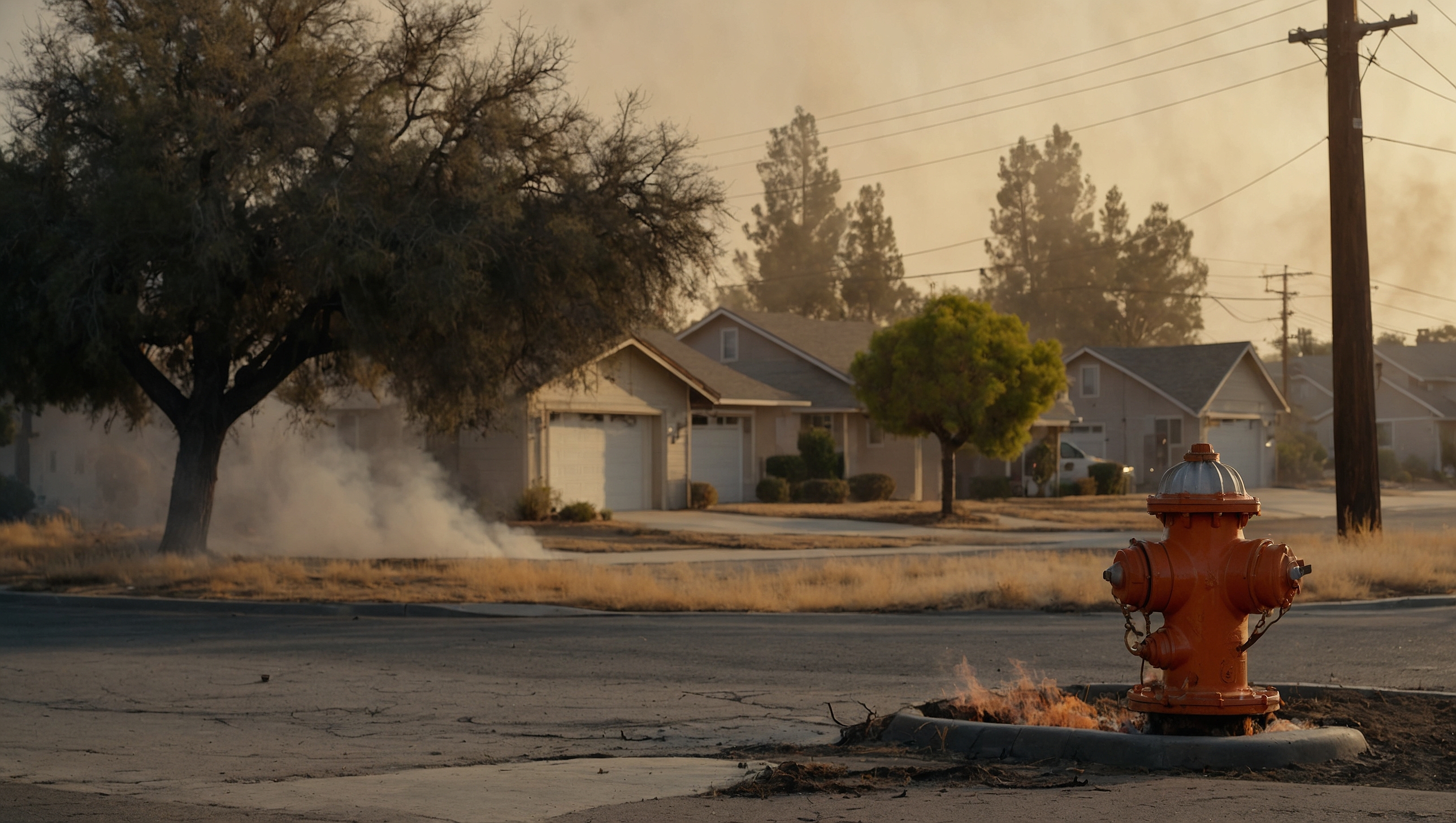
Dry fire hydrant during California wildfire
Section I — The Crisis

California's Water Systems
Fail During Wildfire.

Every major wildfire in the past thirty years has exposed the same catastrophic vulnerability: municipal water infrastructure collapses under wildfire-scale demand. Hydrants go dry. Pump stations lose power. Cities burn.

The pattern is identical in every event — and there has never been a permanent fix. Until now.

Section II — The Solution

Water That Works When
Everything Else Fails

Sealed steel cylinders. Underground. Grid-independent. Always full. Always pressurized. Always ready — even during a PSPS event at the height of fire season.

🛡

Underground Steel Cylinders

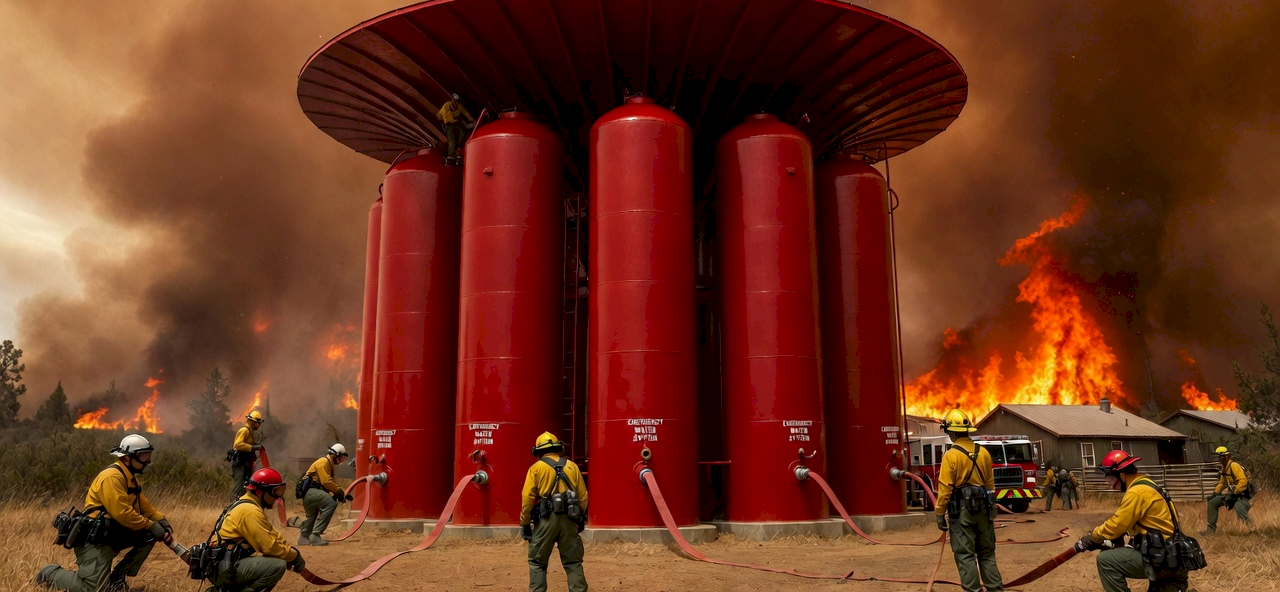
8 sealed 6ft-diameter cylinders buried 20–100ft deep. 33,840–84,600+ gallons per cluster — more capacity than any standard cistern on the market.

Triple Power Backup

Solar + battery + generator — zero grid dependency. FIREWALL is designed to operate at full capacity precisely when the power grid goes down.

💧

Dual Pump System

Pressurized delivery with automatic failover. Standard fire department connections — any engine crew can connect instantly without specialized training.

🌧

Rain Catchment + AWG

Passive rain refill combined with atmospheric water generation during dry season. Every FIREWALL cluster is self-sustaining across all weather conditions.

📡

IoT Real-Time Monitoring

Water levels, pump status, and battery charge reported live to fire dispatch centers. Incident commanders know exactly what's available before they arrive.

🚒

Multi-Engine Manifold

Multiple engines draw simultaneously — like a hydrant on a municipal main. No waiting, no queuing, no compromises when every second counts.

"Standard cisterns store water. FIREWALL deploys water — pressurized, monitored, grid-independent, and multi-engine ready. One investment. Five threat vectors covered."

F.I.R.E.W.A.L.L. Technical Summary
Section III — The Investment Case
100–500×
Protected property value vs. system cost per cluster
8-Cylinder Cluster
$134K–$291K
Protects $25M–$75M
Single-Cylinder Reserve
$25K–$75K
10,000+ gal grid-free
Statewide Pilot (3–5 sites)
$5M–$15M
Performance data for scale
1,000 Units Statewide
$25M–$45M
10.6M gal distributed grid
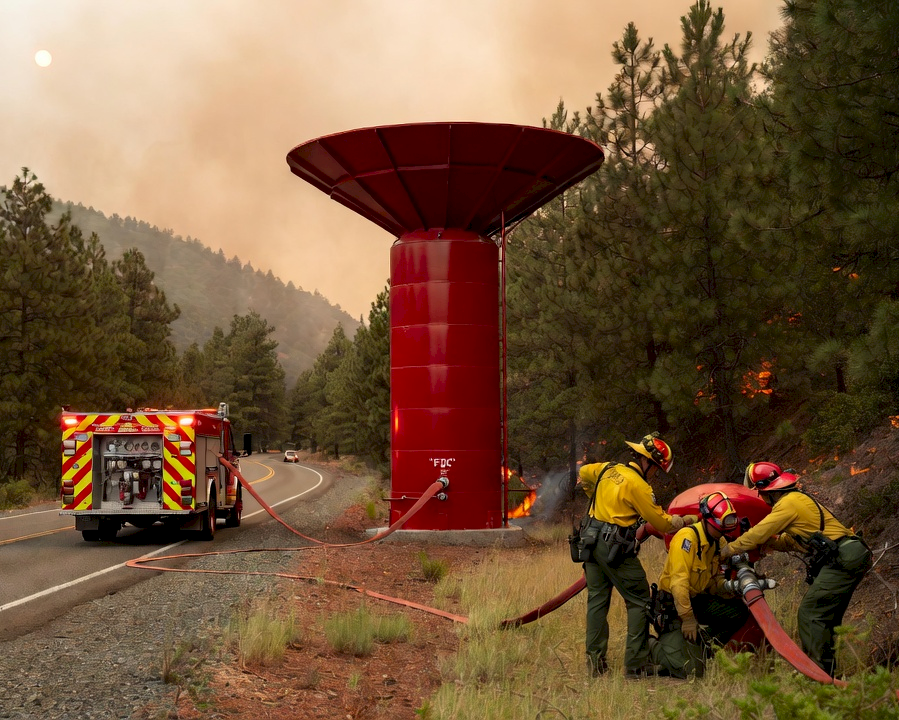
FIREWALL unit deployed on forest road with firefighters
Section IV — Deployment

Five Zones.
One California Grid.

California's wildfire risk is not uniform. FIREWALL's deployment strategy is built around the state's five highest-risk zones — each with a tailored configuration designed for local topography, infrastructure, and threat profile.

Zone 1 — SoCal WUI

Palisades, Malibu, Altadena, San Bernardino

Zone 2 — Bay Area

Oakland Hills, Napa, Sonoma, Santa Cruz

Zone 3 — Sierra

Paradise, Grass Valley, Nevada City

Zone 4 — Central/North

Redding, Mendocino, Trinity

Zone 5 — Coast

Santa Barbara, SLO, Monterey

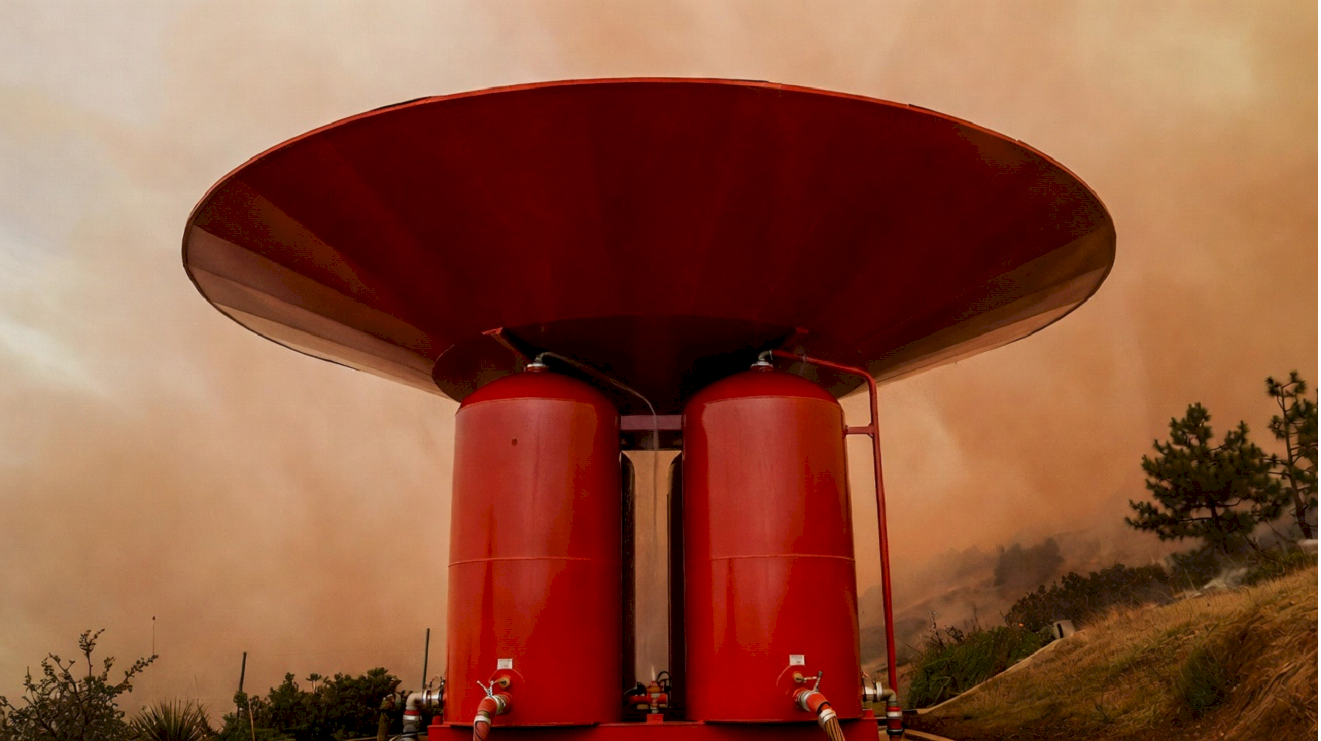
FIREWALL unit close-up against dramatic wildfire sky
Self-Sustaining Technology

Powered by Sun.
Fed by Air and Rain.

FIREWALL's triple energy system eliminates every grid dependency. Solar arrays keep batteries charged continuously. Generator backup handles extended outages. Atmospheric water generation harvests humidity from coastal air during dry season.

The result: a water supply system that refills itself, powers itself, and monitors itself — while reporting its status in real time to the fire dispatch centers that need it most.

FIREWALL cluster deployed against California wildfire
Ready to Act

The Next Fire Is Already Coming.

California appropriated $2.5 billion in emergency funds for the January 2025 fires alone. A statewide FIREWALL network of 1,000 units costs 2–3% of that — and it's permanent infrastructure that reduces the severity of every future event.